TL;DR:
Overview
- Almost every operating system (Windows, macOS, Linux) sends telemetry. The volume, the level of control and the use vary widely.
- The more telemetry serves advertising, the finer the profiling becomes and the higher the risks rise.
Who collects what
- Windows: significant collection by default, hard to shut off completely; serves to improve the product and feed an ecosystem with recommendations and ads.
- macOS and iOS: collection mostly opt-in, anonymized, quality-oriented; little advertising and no sale of data.
- Android: large and frequent collection, even at rest; the heart of Google's advertising model.
- Linux (Debian, Ubuntu, Fedora): by default very little or no telemetry; Ubuntu sends a small opt-out installation report and opt-in crash reports; no advertising, no sale of data.
Monetization
- Windows: product improvement, partner metrics, advertising placements.
- Apple: revenue mostly from hardware and paid services; limited, in-house advertising.
- Google/Android: targeted advertising, with telemetry feeding the profiling.
- Linux: services/support models, no monetization of data.
Key risks
- Profiling and implicit tracking, including approximate location.
- Unintended leaks through error reports or memory dumps.
- For organizations: exposure of the technical environment, compliance and data sovereignty risks.
Quebec and Canada
- Law 25 and PIPEDA require valid consent, minimization, transparency and assessments for transfers outside Quebec. Telemetry that flows to the United States must be assessed and contractually framed. In the event of an incident, notification is mandatory.
Choosing based on privacy
- Consumer privacy priority: iPhone or Linux on the desktop.
- Microsoft ecosystem required: Windows Pro/Enterprise with telemetry at the minimum and well-configured GPOs.
- Android: limit Google as much as possible, adjust settings, consider less-connected variants if you can.
Handy quick settings
- Windows: Diagnostics set to Basic, disable the advertising ID and tailored experiences, local account if possible.
- macOS/iOS: leave Analytics off, turn off Personalized Ads.
- Android: decline sending usage info and diagnostics, reset the ad ID, limit permissions and Google services.
- Ubuntu: uncheck sending stats at installation, leave crash reports on request.
- Debian/Fedora: already lean by default.
Key takeaway
Your OS is also a data contract. For a Quebec and Canadian audience, aligning your OS choice and settings with Law 25 and PIPEDA isn't just prudent, it's strategic.
Understanding the telemetry of modern operating systems
Telemetry refers to the set of technical and usage data that an operating system automatically sends to its publisher's servers. This data can include information about the hardware, the installed applications, how frequently certain features are used, the errors encountered, the device's approximate location, and so on. The stated purpose of telemetry is to improve products and services (for example by detecting bugs or optimizing the most-used features). However, this data collection raises privacy issues: exactly what data is transmitted? Who benefits from it and how is it monetized? What risks does it pose for individuals and organizations, especially in the context of Quebec and Canadian laws on the protection of personal information?
In this article, we examine the telemetry of the main consumer operating systems: Microsoft Windows, Apple macOS and iOS, Google Android, as well as the Linux distributions (Debian, Ubuntu, Fedora). We detail the monetization model associated with this data for each one, along with the potential risks. Special emphasis is placed on the Quebec and Canadian reality, taking into account the legal framework (PIPEDA, Law 25, etc.). The goal is to offer a complete yet accessible overview, in order to understand the importance of considering the question of telemetry when choosing an operating system.
Microsoft Windows: pervasive, services-oriented telemetry
Windows 10 and Windows 11 collect a substantial amount of diagnostic and usage data by default. Microsoft justifies this telemetry by the need to ensure the security and quality of the system (malware detection, updates, feature improvements).
In practice, even a fresh Windows installation frequently communicates with external servers. A 2023 analysis showed that a brand-new Windows 11 PC (never used for browsing) contacts not only Microsoft servers (Windows Update, Bing, etc.), but also several third parties such as Steam, McAfee or advertising-analytics services like Comscore/ScorecardResearchtomshardware.com. In other words, the system sends telemetry data not only to Microsoft, but also to third-party market-research and advertising companies right from startuptomshardware.com.
Windows gathers information such as the hardware configuration, the system version, connected peripherals, installed applications and how often they are used, as well as unique identifiers (such as an advertising identifier tied to the user)thehackernews.com. For example, an advertising ID lets UWP apps and Microsoft services consistently identify a user in order to serve them "relevant" ads based on their app usage, unless the user disables this featurethehackernews.com. Windows 10/11 also incorporates the notion of "tailored experiences" that use diagnostic data to suggest tips or recommendations within the systemthehackernews.com.
Microsoft has defined several telemetry levels (called Diagnostic data in Windows settings): Basic, Enhanced, Full, etc. In theory, only the Basic (minimal) level is required, but on Windows 10 Home/Pro it is not possible to go below this minimal level. Only the Enterprise/Education editions allow telemetry to be almost entirely disabled. Since the Windows 10 Creators Update (2017), Microsoft has detailed the list of data collected for each levelthehackernews.com and has reworked the privacy panel to let users configure certain settings during installationthehackernews.com. Despite these transparency efforts, there is no official option to refuse data transmission entirely – some basic data will always be transmitted for the proper functioning of the product (updates, security)thehackernews.comtomshardware.com. Tests have in fact revealed that even when using third-party utilities to block telemetry, Windows 11 continues to send certain data packets in the backgroundtomshardware.com.
In terms of monetization, Microsoft states that it does not "sell" Windows telemetry data to third partiesreddit.com. This information is mainly used to improve services, identify security problems and guide product decisionstomshardware.com. For example, Microsoft combines data from millions of devices to spot security flaws or faulty drivers faster and fix themcsoonline.com. However, Windows also incorporates advertising features that leverage certain user data. Besides the advertising ID mentioned above, Windows can display targeted ads in the Start menu, in File Explorer (to promote OneDrive or Office 365), or suggest apps from the Microsoft Store. Telemetry data lets Microsoft and its partners assess the effectiveness of these integrated ads and services. Network analysis has notably highlighted the exchange of data with ScorecardResearch (Comscore), a third-party service used to compile usage statisticstomshardware.com, which suggests that Microsoft relies on these marketing tools to measure user engagement and even refine the personalization of sponsored content.
From a privacy standpoint, Windows telemetry drew sharp criticism right from the release of Windows 10. Privacy-conscious users note that the system sends data by default without explicit consent other than accepting the initial license agreement. In response to regulators (notably in Europe), Microsoft acknowledged that it needed to "better inform and request consent" about what is collectedthehackernews.com. For example, the wording in the license agreement states that "by using the software you agree that Microsoft may collect, use and disclose the information as described in the Privacy Statement"tomshardware.com, but this general wording is far from the informed consent recommended by modern laws. Microsoft has set up an online privacy dashboard where users signed in with a Microsoft account can view and manage certain data associated with their account (Edge browsing history, Bing searches, Cortana location, etc.), but the purely low-level telemetry data is not all exposed to the general publictomshardware.com.
Finally, it is worth highlighting a particular risk: at the Full diagnostic level, Windows can collect memory dumps and detailed logs during a system crashprotuts.netprotuts.net. These memory captures could accidentally contain fragments of documents or personal data in use at the moment of the crashprotuts.net. Microsoft states that if personal data ends up in these error reports, it will not be used to identify you, contact you or target you commerciallyprotuts.net. Nevertheless, its mere presence on Microsoft's servers raises questions in terms of confidentiality and security (risk of leak, access by authorized third parties, etc.). Microsoft mentions that certain employees, subcontractors or partners may have access to the collected information, solely in the context of improving the productsprotuts.net. For companies or organizations handling sensitive data, this may constitute a weak point to control (we will return to the risks later).
Apple (macOS and iOS): a privacy-focused model (but not free of collection)
Apple has built itself an image of privacy champion in recent years, with the slogan "What happens on your iPhone, stays on your iPhone." Indeed, macOS (for Mac) and iOS (for iPhone/iPad) also collect usage data, but Apple takes a very different approach from Microsoft or Google. The collection is largely optional and anonymized, and the direct monetization of data is limited.

From installation or during a major update, Apple explicitly asks whether the user wishes to share analytics data with Apple (diagnostics and usage) and with app developers (for third-party apps). If the user chooses not to share, Apple states that it collects only what is strictly necessary for the services to function. If the user consents, the analytics data sent to Apple includes no information that can personally identify youapple.comapple.com. Apple explains that it uses privacy-preserving techniques, such as aggregation and local differential privacy, to blur any individual trace in the reportsapple.com. For example, iOS can record how often certain features are used or how efficient the battery is, and transmit these stats anonymously to help Apple detect that an update may have reduced battery life for X% of users – without knowing exactly which users. The collected data serves to "improve and develop Apple products and services"apple.com, that is, mainly to optimize existing software (iOS, macOS, Siri, etc.) and steer future developments.
Apple also takes care to give granular user control: at any time, you can disable the sending of analytics data from the settings (Privacy > Analytics & Improvements section)apple.com. You can also refuse to have your geographic location included in diagnostic reports (this location, if shared, is used for example to report to Apple where a call was dropped or where the Wi-Fi network is weak, in order to improve network coverage)apple.com. By default, on iPhone, analytics sharing is disabled until the user enables it themselves during a consent dialog. On macOS, at first startup, a screen offers to "Help Apple improve its products and services by automatically sending diagnostics and usage data" – a box that can be unchecked to send nothing. If these options are enabled and the user later changes their mind, a simple toggle lets them turn them off (and Apple then stops sending the corresponding logs).
It is important to note that, even with no "system" telemetry enabled, some Apple services still send data inherent to their operation. For example, macOS checks the security certificate of applications online when they are opened (the OCSP service), which reveals to Apple that an application from developer X was launched at a given time from a given IP address. In 2020, this mechanism caused controversy because it was carried out without full encryption, raising the fear that "Apple knows everything you open on your Mac". Apple has since corrected this point by ensuring that these signature checks are not used to track the user and by allowing them to be disabled if desired. Nevertheless, the episode illustrates that even Apple is not free of metadata leaks. Moreover, researchers have discovered that certain Apple apps collect usage data even when tracking is disabled. For example, the App Store, Apple Music, Apple TV or Stocks send analytics information to Apple independently of the "Allow Apps to Request to Track" setting. This was deemed contradictory to Apple's privacy messagingmedium.com. In plain terms, Apple requires third-party applications to ask permission to track you (App Tracking Transparency), but its own system applications partly escaped this restriction by continuing to send first-party data. This earned Apple some criticism over a "double standard," and could attract the attention of regulators in the future.
In terms of monetization, Apple has a business model mainly centered on selling high-end hardware and paid services (iCloud, Apple Music, etc.) rather than advertising. The firm does not sell its users' personal data to brokers or advertisersmedium.comreddit.com. It does, however, have an in-house advertising arm to display ads in the App Store, Apple News and the Stocks app. These ads can be personalized based on certain user data: for example, the App Store can target app ads based on the user's apps and searches, or Apple News can suggest ads related to interests inferred from reading. Apple states that this targeting is done in a privacy-respecting way, using groups of users with similar characteristics and not linking ad data to the Apple ID by name. In addition, the system offers an option in the settings to disable personalized ads, which limits ad tracking to mere contextual statistics (less intrusive).
In short, Apple positions itself as a privacy-respecting OS: telemetry there is limited, transparent and mainly oriented toward product improvement, without direct external commercial exploitation. The data collected on macOS and iOS is either anonymous or dissociated from the user's identityapple.com. The risks in terms of individual privacy are therefore lower than with a system like Windows or Android. Nevertheless, the user should not conclude from this that their iPhone or Mac sends no data: it does indeed send some (as the comparative table above shows), it's simply that Apple sends far less to its servers than Google does with Androidtherecord.media. Furthermore, Apple is not infallible: certain behaviours (certificate checks, analytics collection by Apple apps) have been called out. One should therefore be aware that, even in the Apple ecosystem, part of your interactions is recorded – but as things currently stand, Apple appears to be striving to minimize the impact on privacy and to comply with data protection principles (we will see in the legal section how Apple and the others comply with Canadian laws).
Android (Google): intensive data collection in the service of advertising
Android, Google's mobile operating system, is the most emblematic case of monetization through data. The majority of Android devices in the world use the "Google" version of the system (with Google Play Services, Google Chrome, Gmail, Maps, etc.), which means they are tightly tied to the Google ecosystem.
This business model rests on the software being free for manufacturers and users, financed by Google's targeted advertising and online services. Unsurprisingly, Android collects an enormous amount of telemetry data, often continuously.
Academic research has quantified this collection. A 2021 study by Trinity College Dublin compared the volume of data an iPhone sends to Apple with the volume an Android phone sends to Google. The results indicate that, on average, Google collects about 20 times more telemetry data from Android than Apple does from iOStherecord.mediatherecord.media. For example, within 10 minutes of startup, a Pixel smartphone running Android sends ~1 MB of data to Google, versus only ~42 KB sent by an iPhone to Appletherecord.media. While idle, an Android device keeps "chatting" with Google servers by sending about 1 MB every 12 hours, whereas the iPhone sends only about 52 KB over the same periodtherecord.media. In terms of frequency, this translates into a contact roughly every 4.5 minutes in the background for both OSes, but the quantity and richness of the data are far greater on the Android sidetherecord.media.
What is this data that Android collects? According to the study and Google's documentation, the system sends: the device's unique identifiers (IMEI number, serial number, Android ID, Google advertising identifier), the SIM card information (IMSI number, phone number and carrier), system telemetry data (system versions, crash reports, usage statistics of the preinstalled Google apps), as well as indirect location data (MAC addresses of nearby Wi-Fi access points, IP address – allowing the approximate region to be deduced)therecord.mediatherecord.media. All this happens even if the user has not opened a Google application and even if they are not signed in with a Google accounttherecord.mediatherecord.media. In reality, as soon as a SIM card is inserted, Android transmits its information to Google (for example to manage activation of the messaging service or network configuration)therecord.media. Moreover, the study revealed that several preinstalled Google applications communicate spontaneously with the Internet, even before any user interaction. Among these apps are YouTube, Google Chrome, Google Docs, Google Messaging, the clock, the Safety Hub app, etc., which send data to Google as soon as the phone is initializedtherecord.media. This means that even without explicitly launching these services, a "standard" Android phone regularly informs Google of its presence, its basic activity and its network environment.
The advertising exploitation of this data is at the heart of the Android/Google model. Google aggregates the collected information to create an advertising profile of the user: inferred interests, habits (browsing times, daily movements via location), types of device used, etc. Concretely, this lets Google offer very precise targeting to advertisers via its advertising platform. For example, if telemetry indicates that a user frequently uses a fitness app in the morning and regularly travels near gyms, Google can infer an "active sports" segment and show them related ads (sports equipment, nutrition, etc.). Likewise, the collection of location data (GPS via Google Maps, or IP and Wi-Fi addresses via Android itself) has great value for geographically targeted ads.
It is important to stress that Google generally combines Android telemetry with the data from the other Google services used (Google Search, Gmail, YouTube, etc.) when the user is signed in to their Google account on the phone. Many users use a Google account to download applications from the Play Store, which then links the device's data to an identity (Gmail address) and to that user's web history. Google can thus cross-reference the data: for example, telemetry indicates that the device was turned on and unlocked at 7:00 a.m., then Chrome (the browser) sent a search query for "pizzerias Montreal," Google Maps then recorded a visit to a given neighbourhood... All these snippets feed a unified profile for personalization and marketing purposes. Android telemetry provides, in a sense, the continuous thread of the usage context that enriches this profile.
Google justifies this intensive collection by stating, similarly to Microsoft, that it is "data necessary for the proper functioning of the services." Following the aforementioned study, a Google spokesperson compared the smartphone to a modern car that sends diagnostic data to the manufacturer to stay safe and efficienttherecord.media. According to Google, Android therefore sends information to ensure that the system and apps are up to date, secure and performanttherecord.media. Of course, this analogy remains incomplete, because the quantity of data goes well beyond simple maintenance. The study highlighted two major concerns: (1) this telemetry data could be enough to re-identify a device uniquely and associate it with personal details (especially when several identifiers are combined), which companies are probably exploiting for ad targetingtherecord.media; (2) the permanent collection potentially allows the user to be located via their IP address or the detected networks, even without GPS, which amounts to implicit geographic trackingtherecord.media.
Unlike Apple, it is difficult for an average user to escape telemetry on Android completely. Some settings exist: for example, in the phone's Google settings, you can disable "Improve Location Accuracy," or refuse to send usage and diagnostic data (this option is often offered during the device's initial setup – many people, eager to use their phone, accept without reading). You can also regularly reset your advertising identifier or refuse ad personalization in the Google account settings. However, these actions only stop part of the data flow. As Professor Doug Leith (author of the study) notes, "users have very few realistic options to prevent the collection of telemetry from their device."therecord.media In practice, using Android means accepting a certain degree of tracking by Google.
In light of all this, the privacy risk is most pronounced with Android/Google. The user is finely profiled, with their mobile activities largely transparent to Google. For those seeking to avoid this, there are so-called "AOSP" variants (Android open source without Google) or alternative OSes (LineageOS, /e/OS, GrapheneOS) that remove the Google components. These solutions, however, are aimed at a more technical audience and are not the norm. In the standard ecosystem, Android is provided in exchange for broad access to data, which is then monetized in the form of advertising revenue (close to US$150 billion annually for Google advertising across all services). One could say that with Android, "if it's free, you're the product" takes on its full meaning.
Linux (Debian, Ubuntu, Fedora): the open, data-minimalist alternative
Unlike the previous systems developed by large commercial companies, GNU/Linux systems are mostly open-source and carried by communities or companies with a different business model (support, professional services, donations). As a result, telemetry collection under Linux is generally nil or very limited. Respect for privacy is part of the philosophy of many free-software projects, and no financial interest pushes anyone to extract user data.
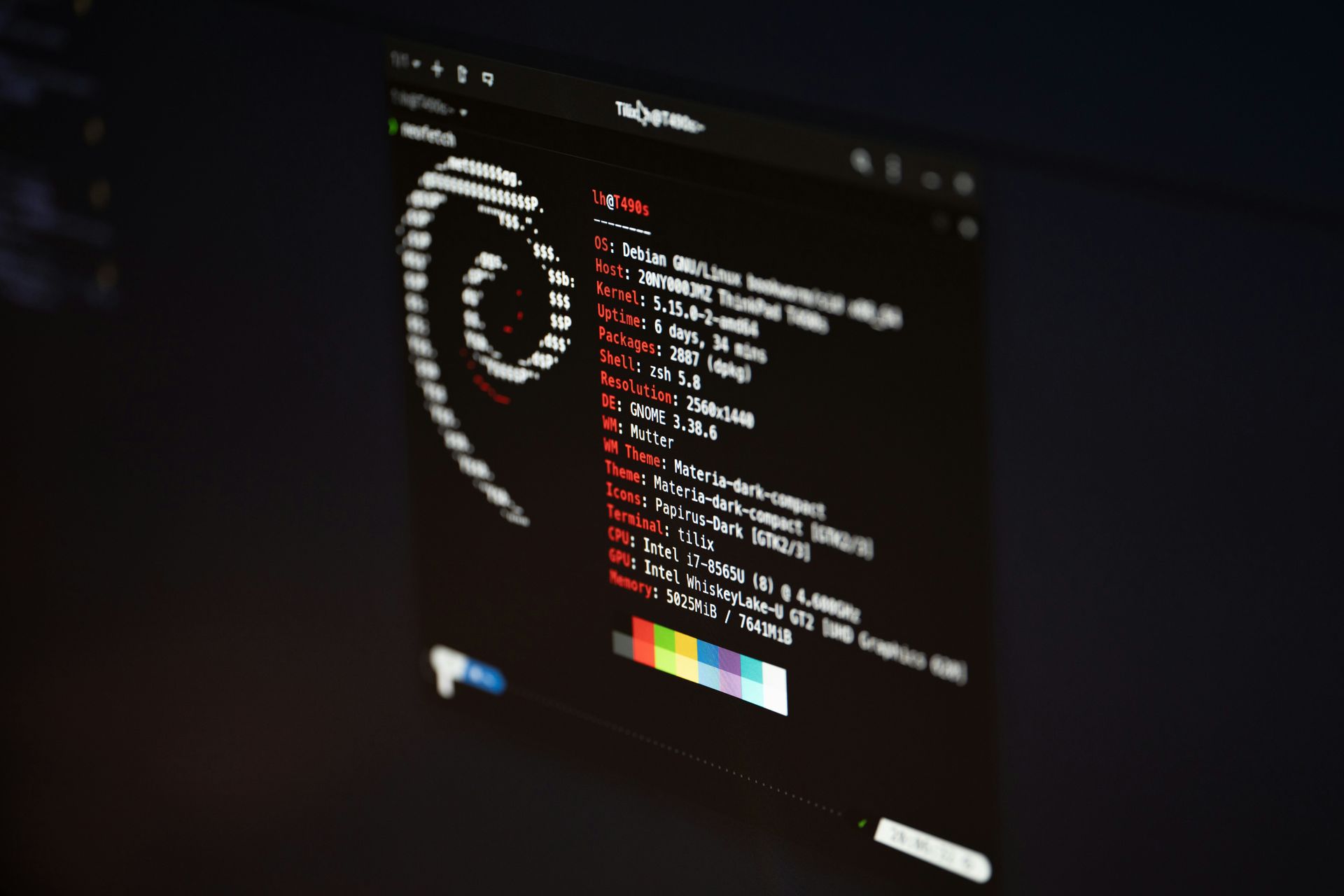
- Debian (one of the most popular distributions, the base of many others) is a non-profit community project. By default, Debian sends no personal or usage data to the developers. The project states this clearly: "There is no requirement for any personal information to be provided to anyone who wishes to use Debian; the system is freely downloadable without registration or identification"debian.org. During Debian's installation, no telemetry question appears and no automatic communication of this kind takes place once the system is running. The only exception, strictly opt-in, is the "popularity-contest" package (often nicknamed "popcon"). It is a program that the user can choose to install/enable and which, if opted in, will periodically send a list of the packages installed on the machine to Debian serversdebian.org. The purpose is purely statistical: to know which software is most used in order to guide maintenance effortsdebian.org. By design, popcon generates a random 128-bit identifier to distinguish reports from the same user, without seeking to link this to a real identitydebian.org. No IP address is stored in the final results (even though, technically, the IP appears in the header when sending, Debian purges it before publishing the stats)debian.org. The raw reports are kept for only 24 hours, the time needed to aggregate them, after which the data is anonymized (the aggregated reports, containing no personal information, are kept indefinitely to track trends)debian.org. In short, Debian embodies a zero-telemetry-by-default approach, with the user having to explicitly consent if they wish to "help" the project through usage data. Even in that case, the information remains very limited (package versions) and leads to public statistics open to all.
- Ubuntu (a commercial distribution maintained by Canonical, derived from Debian) long followed the same line as Debian by sending nothing by default. However, in 2018 (Ubuntu 18.04 LTS), Canonical introduced an automatic system reporting tool aimed at improving the product. This change was communicated publicly: "Ubuntu wants to collect data about your system to improve it"omgubuntu.co.uk. Concretely, the Ubuntu installer now displays a box checked by default inviting the user to participate in improving Ubuntu by sending hardware and configuration informationomgubuntu.co.uk. The user can uncheck this box to refuse (opt-out). If it remains checked (the default behaviour), Ubuntu compiles a series of innocuous data immediately after installation, then sends it once to Canonical serversomgubuntu.co.ukomgubuntu.co.uk. Among the collected data are: the exact version of Ubuntu installed (and any flavours, e.g. Kubuntu), whether there was a network connection during the install, the basic hardware specifications (CPU, RAM, GPU, disk size), the device manufacturer (Dell, HP, etc.), the time zone/country indicated, how long the installation took, whether the user enabled auto-login, the partitioning scheme chosen, and whether they installed third-party codecs or updates during installationomgubuntu.co.uk. Canonical specifies that no IP address is kept in this data and that the transmission is encryptedomgubuntu.co.uk. As we can see, nothing personally identifiable, just enough to draw a portrait of the Ubuntu user base. In addition to this installation report, Ubuntu offers to enable two ongoing services: Apport, which sends anonymous crash reports to the developers in the event of a bug, and Ubuntu Popcon, similar to the Debian popcon for popular packagesomgubuntu.co.uk. These too are optional (Apport asks for confirmation before sending each crash, popcon is opt-in). Notably, Canonical committed to transparency: the aggregated results of the Ubuntu collection are made public so that anyone can consult the usage statistics (distribution of environments, the most common hardware, etc.)omgubuntu.co.uk. This was received positively by part of the community, while still raising reservations among others, given Ubuntu's track record on privacy.
Indeed, it should be recalled that Ubuntu had drawn criticism in the past, notably with the online search feature integrated into Unity (in versions 12.10–15.04). At the time, a search in the Unity dashboard sent that term to a Canonical/Amazon service to display Amazon products as suggestions, which meant that the user's local queries left their PC. The EFF described this feature as spyware, which earned Ubuntu a Big Brother Award. Canonical eventually removed this online search by default. This precedent explains why the 2018 announcement about telemetry was received cautiously by some: the memory of "Ubuntu leaking data" was on people's mindsomgubuntu.co.uk. Nevertheless, the new collection in 18.04 was much more limited and respectful (no user content, just technical stats).
In terms of monetization, the data gathered by Ubuntu is not sold to third parties or used for individual ad targeting. Canonical uses it to guide its technical efforts (for example, to know whether there are still many PCs with 4 GB of RAM, in order to optimize accordingly, or to determine whether the installer takes too long for most people). The company can also use it for global marketing presentations (e.g. "Ubuntu has X million active users" or "such-and-such version of Python is present on Y% of Ubuntu machines"), but these are anonymous aggregates. Canonical's business model rests on selling services (professional support, cloud offerings, Ubuntu Advantage, etc.), not on exploiting user data. Likewise, Ubuntu has no built-in advertising of the Windows or Android kind. On the contrary, one might see Canonical making telemetry a partnership argument: for example, sharing with a manufacturer statistics proving Ubuntu's success on its machines to strengthen the collaboration (these are just global numbers, not personal information). Overall, choosing Ubuntu or Debian amounts to opting out of the data-monetization model: the user is not a product, they are seen more as a collaborator of the community.
- Fedora (a community distribution sponsored by Red Hat/IBM) has historically not enabled telemetry either. However, recent discussions within the Fedora project aim to introduce an anonymous metrics collection to improve the distribution. In 2023-2024, a proposal for Fedora 40+ mentions integrating a "privacy-preserving" telemetry system inspired by that of Endless OSfedoraproject.org. The Fedora developers stress several essential points: on the one hand, every collected metric must be approved by the Fedora community in a transparent way, with a strict policy defining the permitted data (aggregated, non-invasive) and the prohibited datafedoraproject.orgfedoraproject.org. The idea is to build trust: even open-source, an OS must reassure people that it is not becoming intrusive. On the other hand, Fedora wishes to make public the information about what is collected, for example by publishing the schema of the telemetry database and sample datafedoraproject.org. Each advanced user will even be able to redirect their system to their own metrics server (the server code being free) to verify what would be sentfedoraproject.orgfedoraproject.org. Regarding the mechanism, Fedora plans to present a consent toggle at first startup (in the GNOME Initial Setup tool)fedoraproject.org. This setting would be enabled by default (opt-out) to maximize participation, but no data would be transmitted before the user has had the opportunity to disable the option during the initial setupfedoraproject.orgfedoraproject.org. Thus, Fedora would remain compliant with the consent requirement, while avoiding the under-participation bias of an opt-in (a bias that makes the data useless because it is not representative)fedoraproject.orgfedoraproject.org. Among the data Fedora might one day gather (if the community validates it): the popularity of the development environments (IDEs) used, the use of containers (Toolbox), how often a given GNOME settings panel is opened (to guide the design), or a few hardware details like "SSD or hard drive?" to know on what medium Fedora resides for usersfedoraproject.orgfedoraproject.org. The developers insist that the goal is solely to guide technical decisions, not to profile users individuallyfedoraproject.org. No nominative data would be collected, just statistical counts.
Currently (Fedora 38/39), nothing is yet sent automatically to the Fedora Project without consent. Fedora, like Debian, only offers the option to send error reports via ABRT (a bug-reporting tool), which is left to the user's discretion. Fedora also has a 'popularity-contest' package available (inherited from Debian) but it is not installed by default. So we can consider that Fedora (like most Linuxes) has no telemetry by default in 2025. If Fedora introduces this opt-out feature in future versions (Fedora 40+), it will be implemented with many safeguards to preserve trust.
In summary for Linux: the popular consumer distributions vary slightly in their approach, but remain frugal in data collection. Debian collects nothing without the user's explicit consent. Ubuntu collects some technical information at installation, with an opt-out available, and makes it all anonymous and public, with no commercial use. Fedora has nothing of the sort for now but is considering an anonymized opt-out collection strictly overseen by the community. None of these distributions includes advertising or sells any data whatsoever about its users. Their business model does not depend on data: Debian lives on volunteer work and donations, Fedora is supported by Red Hat which sells support to companies (RHEL), Ubuntu is financed by Canonical through professional services and cloud.
For a user or organization very concerned about privacy, the Linux ecosystem is often recommended, precisely because there is no hidden or profit-driven telemetry. It should however be mentioned that, even under Linux, your applications (web browser, third-party software) may have their own telemetry or network-access mechanisms. But the operating system itself, in the Linux world, tends to remain neutral and silent with respect to your personal data.
Risks tied to telemetry for individuals and organizations
The collection of telemetry data by operating systems is not without consequences. Even though this data is often meant to improve the user experience, it can also be misused or poorly protected, creating risks at several levels.

For individual users
- Erosion of privacy and anonymity: Every piece of data sent, even seemingly harmless (e.g. the list of your applications or how long you use the device), contributes to building a profile of your habits. Accumulated, this information can reveal your interests, your daily routine, your movements, and potentially sensitive information (imagine an OS frequently noting the use of a health or finance application – that says a lot about you). In the case of Android, this profiling is very thorough and directly exploited to target you with specific adstherecord.media. The danger is losing control over who knows what about you. For example, a user may receive ads or personalized content targeted so precisely that they feel uncomfortable, wondering "how does Google/Microsoft know this about me?". This feeling of being spied on can erode trust in technology.
- Surveillance and traceability: Telemetry, combined with other data, can serve as a basis for broader surveillance. Here we are talking not necessarily about the system's publisher, but about possible malicious third parties or authorities that would access this data. For example, if the telemetry communications are not well secured, a hacker on the same network could intercept certain packets and extract information from them (we saw that macOS sent in cleartext the names of the developers of opened apps via OCSP, which could have temporarily exposed users to surveillance by an ISP or other party before the fix). Another scenario: through a legal request, a government agency could ask Apple, Google or Microsoft for the telemetry logs tied to a suspect device or account. This would provide a technical history potentially useful for retracing a person's activity (usage times, movements, network connections, etc.). In a constitutional state like Canada, this kind of access is regulated, but if the data travels to other countries (e.g. to the United States, the home of most tech companies), it can be subject to foreign laws (Patriot Act, CLOUD Act) that are less protective of the privacy of non-residents. A Quebec individual must know that the data sent to Microsoft or Google in the USA could, in theory, be disclosed to American authorities by court order, without them being informed.
- Manipulation and the attention economy: Once profiled by the data, the user can be more heavily targeted by content that influences their behaviour. For example, Windows uses telemetry to display "tips" or recommendations in the Start menu. These are not just innocent suggestions – sometimes they are incentives to try a given Microsoft service or to finish setting up a given account, calibrated based on your usage. Likewise, on mobile, the collection of your habits feeds algorithms that may seek to maximize your screen time (YouTube, TikTok, etc. use data to get you hooked). This risk is more indirect, but quite real: the more the OS and its ecosystem know about you, the more they can personalize the experience... at the risk of encouraging addictive behaviours or locking you into filter bubbles. Hyper-targeted advertising can also exploit your weaknesses (e.g. someone often geolocated near restaurants could receive many home-delivery ads right at dinnertime, playing on impulse buying). Thus, telemetry can, without direct malice, lead to a less free and conscious use of our devices, by reinforcing personalized marketing schemes.
- Unexpected leaks of personal data: Although the big companies promise security, no one is immune to a data breach. If an OS's telemetry servers were compromised, attackers could get their hands on immense quantities of user data. Granted, this data is in principle anonymized, but it has been shown that with enough data points, it is often possible to re-identify individuals (by cross-referencing). For example, a 2021 leak of telemetry data from a mobile operator made it possible to infer the movements of certain specific people. In the OS context, imagine a leak of Microsoft logs: even if they don't have your name, they could list "User X uses Word and Outlook 8 hours a day on weekdays, has such-and-such PC model, etc." – cross-referenced with other leaks, one could guess who X is. Furthermore, recall that full Windows telemetry can accidentally contain excerpts of documents or typed text (via memory dumps)protuts.net. Likewise, an app's crash report can reveal the name of a file opened at the time of the crash – if it's called "AcquisitionProject_ClientXYZ.docx," that's already a leak of context. These hypothetical leaks could expose elements of your private life without you being aware of it (since they are sent automatically).
- Feeling of trust or technological alienation: Lastly, on a more subjective level, knowing that your OS "reports" data continuously can create a feeling of alienation in the user. Many people consent out of fatalism, but feel spied on, which can alter the relationship of trust with the product. Conversely, using a minimalist open-source system can provide a feeling of control and peace of mind. This psychological factor is important: since technology is supposed to serve the user, if they feel they are instead being served up as fodder to companies, their overall experience deteriorates. Hence the importance for the general public to become aware of these issues – which is precisely the goal of this article.
For organizations (companies, institutions, governments)
The risks tied to telemetry are amplified in the professional or institutional context, where the stakes of confidentiality, legal compliance and security are critical.
- Confidentiality of corporate data: An organization often handles sensitive data (business plans, customer data, trade secrets, medical information, etc.). If the operating system collects information about the work environment, there is a risk that fragments of confidential data could "leak" to the system's publisher. Take the example of a law firm using Windows 10: if a client Word document causes a crash and Windows sends a full memory report to Microsoft, part of the document's text may end up in that reportprotuts.net. Of course, Microsoft is not going to manually read this data for fun, but it exists on its servers. In the event of a hack or a government access request, these fragments could be revealed. Even short of that, the fact that a company lets technical information about its IT fleet flow outside can be problematic. For example, telemetry could reveal which internal software is used and in what versions – information useful to an attacker for targeting vulnerabilities. Moreover, a company generally has confidentiality policies toward its customers: it must ensure that their data is not shared without authorization. If an OS sends information containing customer data (even indirectly), the company could be in breach of its confidentiality obligations.
- Regulatory compliance and data sovereignty: In Canada and especially in Quebec, the laws on the protection of personal information require organizations to protect the personal data they hold (employees, customers, citizens) and to control where it is sent. In this context, the use of operating systems that transfer data to the United States or other countries can be problematic. Law 25 in Quebec has required since September 2023 that, before communicating personal information outside Quebec, a company conduct a privacy impact assessment and ensure that the information will receive adequate protection in the destination countrycai.gouv.qc.ca. Applied to OS telemetry: if a company's workstations send data (even pseudonymous) to Microsoft (USA) or to Google, this constitutes a communication of potentially personal information (e.g. an employee's identifiers tied to the device) outside QC. The company should theoretically assess the risks (can this data identify someone? Is the level of protection in the USA sufficient?) and possibly conclude a written agreement with the provider on the processing of this datacai.gouv.qc.cacai.gouv.qc.ca. In practice, this is very complex to implement for telemetry that is invisible to the naked eye. Few companies do this level of technical analysis. Nevertheless, the failure to comply could one day be raised: a company could be reproached by an auditor or the Commission d'accès à l'information (CAI) for allowing employee data to leave without explicit consent toward a foreign provider. The principle of data minimization also comes into play: the law requires that only the information necessary be collected/used. Yet Windows or Android telemetry sends far more than what is strictly necessary for the company's mission. This could be seen as excessive collection if the organization is responsible for it.
- IT security risks: Any outgoing communication from your systems can potentially be exploited. In the case of telemetry, one can imagine scenarios where an attacker poses as the telemetry server (a man-in-the-middle attack) and takes advantage of it to inject malicious code or instructions. Granted, telemetry communications are generally encrypted and signed, which limits this risk. But more concretely, some third-party tools meant to block telemetry (e.g. scripts that modify the system to disable services) can weaken security if used incorrectly. Moreover, having multiple open network connections increases the attack surface in general. For highly secure environments (defence, research, etc.), it is common to seek to neutralize any uncontrolled outflow of information. That is why such settings often turn to locked-down Linux OSes or specific versions of Windows (Windows 10 Enterprise in "Security" mode where telemetry is reduced to the minimum), or even machines without internet access for certain critical uses. In plain terms, telemetry can represent an unintentional data exfiltration channel, which is to be avoided in a maximum-security architecture.
- Financial and legal impact: If a company or institution were to fall victim to a data leak via telemetry, the financial consequences could be heavy (loss of intellectual property, regulatory fines, lawsuits from affected individuals). For example, if a hospital uses connected devices that send logs containing patient information and a breach exposes these logs, the hospital could be held liable for not having sufficiently secured this data. In Quebec, Law 25 introduced the obligation to notify the CAI and the affected individuals in the event of a confidentiality incident presenting a risk of serious harmcai.gouv.qc.ca. A leak of personal data via a telemetry service would therefore force the organization to trigger these procedures (notification, incident register, etc.) with the reputational impact one can imagine. Moreover, Law 25 and the future federal law provide for significant monetary penalties (up to several million dollars, or even a percentage of revenue for serious faults) in the event of a failure to meet data-protection obligations. Not controlling where the data from one's systems goes could be interpreted as a failure.
In short, for an organization, OS telemetry is an element not to be neglected in the analysis of digital risks. While it can bring benefits (e.g. Microsoft Defender SmartScreen – which sends data about unknown executables to protect against malware – is useful and is part of security telemetry), it must be configured so as to minimize exposure. Many companies adopt policies via administration tools (GPO under Windows, MDM profiles for macOS/iOS) to disable or reduce telemetry on workstations. Microsoft offers, for example, a "Basic diagnostic data" mode in Windows Pro/Enterprise that IT departments enable via group policyprotuts.netprotuts.net. Sensitive organizations can also opt for open-source solutions for certain uses in order to keep full control (e.g. using Linux on servers to ensure that no data leaves without their order). Finally, it is crucial that they take the legal framework into account: internally, this may involve mentioning in the internal privacy policy that a given piece of software could transfer data to the USA, or ensuring that employees are informed of it (respecting the principle of transparency toward the individuals concerned).
Legal framework in Quebec and Canada: consent, Law 25, PIPEDA, etc.
Canadian and Quebec legislation on the protection of personal information is evolving to better regulate this type of digital data collection. How do Windows, Apple, Google or Canonical stand in relation to these laws? What rights do users here have?

PIPEDA – Federal Personal Information Protection and Electronic Documents Act
At the federal level, the Personal Information Protection and Electronic Documents Act (PIPEDA, or LPRPDE in French) applies to private-sector organizations in the course of commercial activities. It sets out principles such as valid consent, limiting collection and the reasonable use of personal data. In theory, this means that any company that collects identifiable information about a person must obtain their informed consent, and gather only what is necessary for the determined purposes.
In the context of OS telemetry, one may wonder whether technical data (hardware type, app usage) is considered personal information within the meaning of the law. The definition includes "any information about an identifiable individual," which can encompass unique device identifiers when they are associated with a user. For example, an advertising identifier or a serial number combined with an IP address and a user account can become identifiable. Companies like Microsoft, Apple or Google all have privacy policies that cover the collection of this data and state that it may be gathered to improve the service. By using the service, the user gives implicit consent, according to them. However, since 2018, the Office of the Privacy Commissioner of Canada (OPC) has insisted that consent be "obvious, transparent, and given in an affirmative way" especially for unexpected uses. Microsoft adjusted its strategy by offering more settings in plain language in Windows (which can be seen as an attempt to meet this transparency requirement)thehackernews.com. Apple explicitly asks permission for its analytics, which aligns with PIPEDA. Google, for its part, integrates consent globally through acceptance of the terms of use and offers opt-out settings. It is true that most users are not fully aware of the scope of their initial consent (which often consists of clicking "I accept" during setup). From PIPEDA's standpoint, this could be problematic if challenged, but no landmark decision has so far forced these companies to radically change their approach in Canada.
PIPEDA also requires data security. OS providers must protect the information they collect. So far, there has been no notorious security breach in Canada involving the telemetry data of Windows/Apple/Google. If there were, the company would have to notify the affected individuals if the risk of harm is real, under the latest amendments to PIPEDA (breach notification obligation, since 2018).
Note that a federal bill (Bill C-27, the 2022 Digital Charter Implementation Act) aims to modernize PIPEDA into a Consumer Privacy Protection Act that would introduce severe fines for non-compliance and further strengthen the obligations of transparency and consent. If this bill becomes law, practices such as telemetry by default could be examined closely. The OPC has already indicated that implicit consent is only acceptable for collection that is obvious and necessary to a service. For example, it might rule that it is not "necessary" for an OS to collect data for ad-personalization purposes without explicit consent. We will have to see how the major publishers position themselves, but one can expect them to slightly adapt the Canadian user experience if required (as they did to comply with the GDPR in Europe – e.g. Microsoft has documentation dedicated to Windows GDPR compliance, which indirectly benefited users in other countries with more transparency).
The Quebec reality and Law 25
Since 2021/2023, Quebec has had a strengthened legal framework with the adoption of Law 25 (formerly Bill 64). This law modernizes the two provincial laws on the protection of personal information (public sector and private sector). For the private sector (companies), it introduces very clear obligations which, applied to the subject of telemetry, are quite interesting:
- Explicit and informed consent: Law 25 requires that consent to the collection of personal information be "manifest, free, informed and given for specific purposes." Moreover, if it is requested in writing (electronically), it must be presented separately from any other informationcai.gouv.qc.cacai.gouv.qc.ca. In the spirit of the law, no more hiding consent in a 40-page license agreement. This poses a challenge for telemetry: for example, Microsoft should ideally obtain separate consent solely for telemetry from a Quebec user, which it does not do today (consent is bundled into the overall agreement during installation). Apple does it better, by separating the question of diagnostics during setup, which would meet these criteria. Google on Android displays some requests (location, etc.) but not necessarily for all the data sent. With Law 25, a company could theoretically be required to prove that it has valid consent for each category of personal data collected via telemetry. Otherwise, it would have to stop the collection or find another legal basis (in Quebec, apart from consent, there are few options – perhaps the exception of collection necessary to provide the product, but the interpretation will be strict). It will be interesting to see whether the CAI (Commission d'accès à l'information) looks into these practices in the future.
- Processing of sensitive information: The law introduces the notion of sensitive personal information (e.g. medical, biometric information, political opinions, etc.). This data, if collected, requires separate explicit consentcai.gouv.qc.ca. Normally, OS telemetry does not directly touch these categories, with exceptions (e.g. Windows collecting voice samples to improve Cortana – the voice being biometric and potentially revealing of one's health, etc., but Microsoft has scaled Cortana back; or Apple, which had a project to scan iCloud photos for CSAM – abandoned). So this point is less directly applicable, unless one considers that knowing which applications you use can reveal a sensitive trait (e.g. using a mental-health app → potentially sensitive information). This is delicate ground.
- Communication outside Quebec & cloud hosting: As mentioned, Law 25 requires an assessment before sending personal data outside the provincecai.gouv.qc.ca. It also requires that companies entrusting data to providers (e.g. a cloud subcontractor) do so with a contract governing the use of the data. Yet, in telemetry, the company that uses the software is somewhat in the position of an "inverse subcontractor" – it is the software provider that collects on its own behalf. For example, a company installing Windows 11 acts in practice as a channel for communicating its employees' data to Microsoft. Microsoft is not a subcontractor but a separate data controller for this data (it uses it for its own purposes). This poses a problem: the Quebec company has little contractual control over this (you don't negotiate the Windows EULA when you buy it). And yet, it is the company that deploys the tool and that could be singled out if employee data leaves without legal consideration. Law 25 places a strong responsibility on local companies for the data they "hold." One could argue that the telemetry logs are never in the company's possession (they transit directly from the device to Microsoft), but if these logs contain information about an employee, that employee could consider that their employer failed to protect their information (especially if they were not informed that their technical activity would be transmitted). This is a fairly new area, not yet legally tested, but prudence suggests that organizations document and communicate this kind of flow in order to be transparent.
- Rights of individuals: Law 25 strengthens the rights of access and rectification. An individual can ask a company to provide them with all the personal information it holds about them. Theoretically, this would include telemetry data if it is associated with them in one way or another. In practice, if a Quebec user asked Microsoft "give me all the personal data you have about me," Microsoft would have to provide not only the account information (name, email, etc.), but potentially also the diagnostic logs tied to their device ID, insofar as these can be linked to their account or device (this is not trivial, but the person could provide the ID of their Windows installation via a tool). Microsoft might retort that its telemetry is not personal because it is pseudonymous, but that is debatable (a device ID unique for a period of time is information about an individual identifiable through the owner-device link). The same reasoning applies to Apple and Google. So far, few people make these requests, but with growing awareness, it could happen. The Quebec law also provides for a right to portability (transmission of data in a readable format) – we are not yet there for telemetry, that's more for data such as purchase history, etc. Nonetheless, the principles are evolving toward more transparency.
- Accountability and penalties: Law 25 introduces the obligation to appoint a person in charge of the protection of personal information in each company, to conduct risk assessments, and the CAI can impose severe penalties (administrative fines of up to $10M or 2% of revenue, penal sanctions of up to $25M or 4% of revenue in extreme cases). If a serious failure were found in the management of telemetry data, a penalty is not out of the question. For example, if a company used "spyware" software without disclosing it – this was a problem with Carrier IQ about a decade ago: a utility embedded in Android phones that collected detailed data without consent, which caused a scandal and legal action in the USA. On this point, if an OS oversteps the laws, there could be recourse. An individual or a group could file a complaint with the CAI or the OPC if they believe an OS is violating their rights (e.g. "Windows collects my data without valid consent"). The question would then be to determine the jurisdiction and the responsibility (Microsoft, as a commercial company operating in Canada, can be subject to PIPEDA; for Law 25, the CAI could argue that Microsoft offers a product to Quebecers and processes their data, and therefore must comply as well).
In practice, how do these companies react or prepare? Apple and Microsoft already have a strong compliance culture (if only to comply with the European GDPR, very close in spirit to Law 25). We see Microsoft showcasing its Privacy Dashboard and allowing users to configure privacy more easilynext.ink. Apple communicates enormously about privacy as a selling point, which gives it an incentive to limit slip-ups. Google is perhaps the most exposed, because its model depends on data. Google Canada regularly deals with the OPC (the health-based advertising-from-searches affair, etc.). One can expect Google to put forward the necessary for operation argument to justify Android telemetry. However, the notion of necessity is narrower under Quebec law: it is not enough to say "we need it for ads," it would have to be necessary to provide the basic service. Yet a phone can function without sending 1 MB of data every 12 hours (alternative ROMs prove it). So this is potentially contestable.
Key takeaways for Quebec/Canadian users: you enjoy relatively strong rights when it comes to data protection. You are entitled to know what information a system collects about you and how it is used. Organizations must obtain your consent to collect personal data – even if, in fact, this consent is often "tucked away" in obscure terms of use. With the coming into force of Law 25, we can hope for more clarity: for example, that installation interfaces adapt to highlight the choice to enable/disable telemetry. In the meantime, do not hesitate to manually configure your privacy settings on each OS (disable the personalized-ad options, diagnostics sharing, etc.). This is not only your right, it is encouraged by the data-protection authorities.
Conclusion: choosing your operating system with full knowledge of the facts
Telemetry has become an unavoidable issue in the choice and use of a modern operating system. On one side, it brings tangible benefits: continuous software improvement, fast security fixes, personalized experiences, even free services made possible by the monetization of data. On the other side, it places risks on privacy and raises ethical questions about the ownership of usage data. Each major player adopts a different philosophy:
- Microsoft (Windows) collects a lot of data by default to evolve Windows and its services, and partly monetizes the ecosystem through advertising and partnerships. The user has a few options to limit the damage (setting diagnostic data to "Basic," disabling the advertising ID, etc.), but a certain level of collection is impossible to eliminate completelytomshardware.com. Windows is a fit if you use the Microsoft ecosystem intensively (Office 365, etc.) and appreciate the intelligent cloud features, but be aware that in exchange your system interactions are not entirely private.
- Apple (macOS, iOS) positions itself on data minimization. Telemetry there is opt-in, anonymized and used mainly internally to improve quality. Apple does not make significant advertising revenue from your data, which limits the temptations of abuse. For a user concerned about privacy but not technically expert, the Apple world is often a reassuring choice – although one must remain vigilant (disabling analytics sharing if desired, and not forgetting that Apple remains a company that can make mistakes or reconfigure its strategy). Your privacy has more safeguards at Apple, as shown by the stark contrast between iPhone and Android in terms of the volume of data collectedtherecord.media.
- Google (Android) offers extremely convenient and often free systems and services, in exchange for an extensive exploitation of your data. Android is very integrated with Google's services, which means it is the most "chatty" OS toward the outside. For an average Quebec user, this means that their Android phone constantly sends snippets of their digital life to Google, which uses them for ad targeting, content personalization, etc. Some are quite happy with it (appreciating, for example, the contextual recommendations of Google Assistant, the automatic backup of their photos, etc.), others are uncomfortable with it. It is possible to partially limit this (not using a Google account, or using an Android without Google Play Services), but it is neither simple nor officially supported. Choosing Android means accepting being in the Google ecosystem with everything that implies in terms of data. In the Quebec context, one can hope that legal pressure will force Google toward more transparency and user control in the future.
- Linux (Debian, Ubuntu, Fedora and the like) represents an alternative where you are in control. By default, you are not tracked by your OS – generally, it is even the opposite, it is you who must sometimes manually provide reports on the forums in case of a bug, because the system will not do it on its own. For organizations and individuals for whom confidentiality is paramount (and who can do without certain consumer conveniences), Linux is an excellent choice. Not only is there no hidden telemetry, but being open-source, anyone can audit the code and verify the absence of spying functions (the community would not fail to publicly denounce the slightest piece of suspicious code). The popular distributions still remain user-friendly while respecting privacy. Ubuntu, for example, made its collection transparent and optional, which remains aligned with free-software values while gathering useful information to improve the system without betraying usersomgubuntu.co.uk. Furthermore, Linux often allows finer control of the network (you can configure precisely what does and does not leave, via firewalls, etc.). Of course, the choice of Linux may also be dictated by other factors (required software, available technical support), but from the telemetry/monetization standpoint, Linux is the most virtuous.
Ultimately, the choice of an operating system should incorporate the "data protection" dimension just as much as the budget, the features or the ergonomics. In Quebec and Canada, we are fortunate to have a legal framework that recognizes the importance of consent and confidentiality. But the law cannot do everything if the user themselves is not informed. Hence the importance of raising public awareness – which is what this article contributes to – about what our modern operating systems collect behind the scenes.
A few practical tips by way of conclusion:
- Inform yourself and use the available settings: Whether you are on Windows, macOS, iOS, Android or Ubuntu, take the time to go through the Privacy section of the settings. Disable whatever seems intrusive to you (e.g. ad personalization, background location for non-essential services, diagnostics sharing if you are not comfortable with it). These options exist precisely because you have the right to refuse themtomshardware.comprotuts.net.
- Minimize connected accounts if possible: On Windows, you can use a local account rather than a Microsoft one to reduce the centralization of data. On Android, you can limit the number of synced Google accounts, or use alternative apps that are less data-hungry (the Firefox browser instead of Chrome, etc.). On Apple, check the settings of each app (some system apps like Safari offer "Do Not Track" options or the ability to turn off Siri Suggestions that send data).
- Consider the open-source alternative: If your context allows it (for example, mainly web use, basic office work), try a privacy-respecting Linux distribution. Or on mobile, modified versions of Android without Google. This can be an interesting learning project and a way to considerably reduce your data exposure.
- At work, talk with your IT department: Employees also have a say. If you are in a sensitive sector, make sure your IT department has properly configured the OSes to limit external sharing. For example, in some companies, the Windows Telemetry Management tool is used to ensure that only the minimal security data is sent to Microsoft. With the new laws, employers must also inform staff of what data is collected. An internal communication on this subject is a sign of a proactive and transparent organization.
Ultimately, let us not forget that technology must remain a tool, not an uncontrollable snoop. By choosing an OS based on its telemetry policy, and by judiciously configuring its settings, everyone can find a better balance between enjoying digital advances and preserving their private sphere. Choosing your operating system is not only a matter of performance and available applications: it is also opting for a certain contract of trust regarding our personal data. It is up to you to decide which one best respects your values and needs.
Definitions of the acronyms used: PIPEDA – Personal Information Protection and Electronic Documents Act (the Canadian federal law, called LPRPDE in French). Law 25 – Common name for the 2021 Quebec law modernizing the protection of personal information (stemming from Bill 64). GDPR – General Data Protection Regulation (European Union), often taken as a model for new laws elsewhere. OCSP – Online digital-certificate verification protocol. ID – identifier. Opt-in / Opt-out – respectively, requiring active consent from the user to participate / being included by default with the possibility of withdrawing. CAI – Commission d'accès à l'information du Québec (the local regulator for personal data).
Sources: The information in this article draws on reliable and recent sources, notably technical analyses (e.g. Tom's Hardware on Windows 11 tomshardware.comtomshardware.com), official documents from the publishers (Apple apple.comapple.com, Microsoft protuts.net), academic studies (Trinity College Dublin on iOS vs Android therecord.mediatherecord.media) and the applicable legal texts (the CAI website cai.gouv.qc.cacai.gouv.qc.ca). Each key claim is accompanied by a reference to allow the reader to verify its accuracy. We also encourage readers to consult these references to dig deeper into each aspect. The technology landscape is evolving rapidly, as are the regulations: staying informed is your best asset for navigating the digital age with peace of mind.